How to find the center of a board, dowel or bowl blank
Three jobs, one idea: let the tool find the middle so you do not have to measure and divide.
For a board edge, set a centering disc over the edge and mark through its hole, then flip it and mark again to check. For a dowel or a round bowl blank, push a center finder against the sides, scribe the slot, turn it a quarter turn and scribe again. The lines cross at the centre.
The centre of a board's edge
You want a groove, a row of dowel holes or a screw line down the middle of the thickness of a board. Measuring and halving works until the board is not the thickness its name says, and rough lumber often is not.
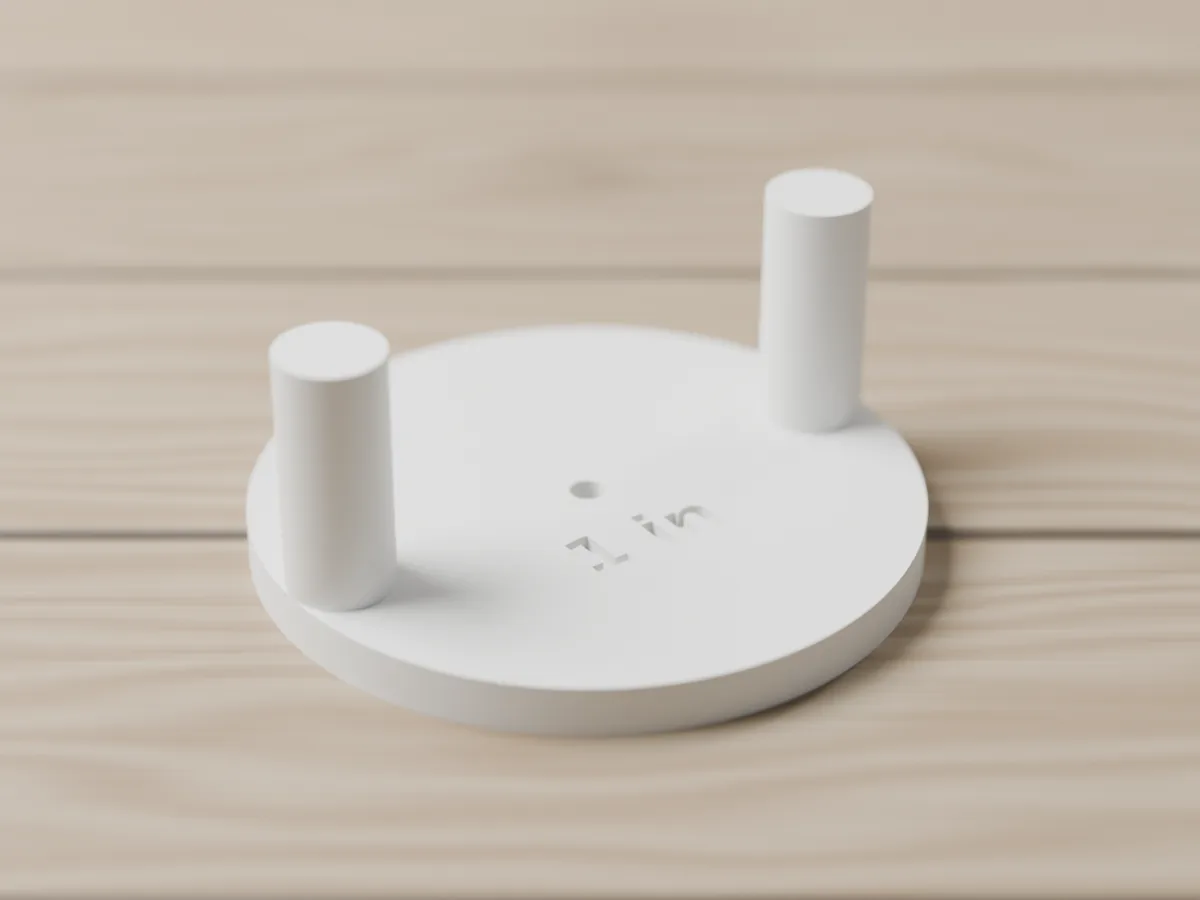
- Measure the thickness of the board and pick a disc whose slot is just a little wider. The discs come in 1/2 in (12.7 mm), 1 in (25.4 mm) and 2 in (50.8 mm) sizes, and each slot leaves 0.02 in (0.5 mm) of play.
- Set the disc on the edge of the board with one leg on each face. The disc rests on the edge, and the hole at its centre sits over the middle of the thickness.
- Push a scribe, an awl or a mechanical-pencil lead through the hole and slide the disc along the board. The mark is a centreline. The hole is 0.08 in (2 mm), so a wooden pencil will not fit.
- To check the mark, lift the disc, turn it half a turn so the legs swap faces, and mark again. If both marks land on one line, the board is centred. If you see two lines, the true centre is halfway between them.
If the board is thicker than the slot, the disc will not seat. Go up one size.
The centre of a dowel or other round stock
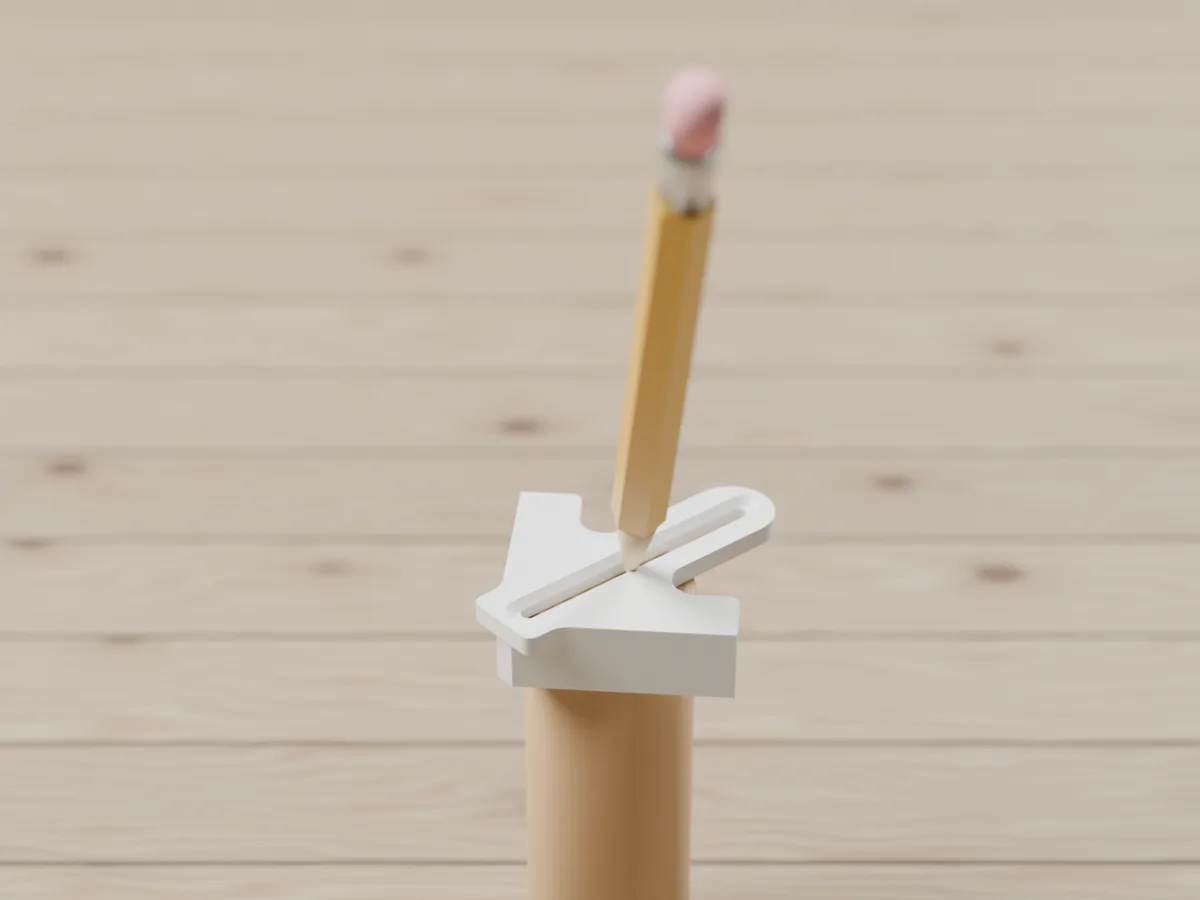
Most ways of finding the middle of a dowel need a rule, some arithmetic or a compass you then have to set. A center finder has two walls at exactly 90 degrees. Pushed against the sides of a round, the walls touch it along two tangents, and the line that splits the angle between them always passes through the centre. The slot in the finder sits on that line.
- Rest the plate on the end of the dowel with the two walls hanging down over the sides.
- Push the walls against the stock so both touch. The slot now runs along a diameter.
- Scribe along the slot with a sharpened pencil or a scribe.
- Turn the finder about a quarter turn and scribe again. The two lines cross at the centre.
The two lines do not have to be square to each other. Each line already runs through the centre, so any two lines about a quarter turn apart cross there. Two lines very close together make a long, blurry crossing, so avoid that. The 2 in (51 mm) finder takes round stock from a 1/4 in dowel up to 1-1/4 in (32 mm) across.
The centre of a round bowl blank
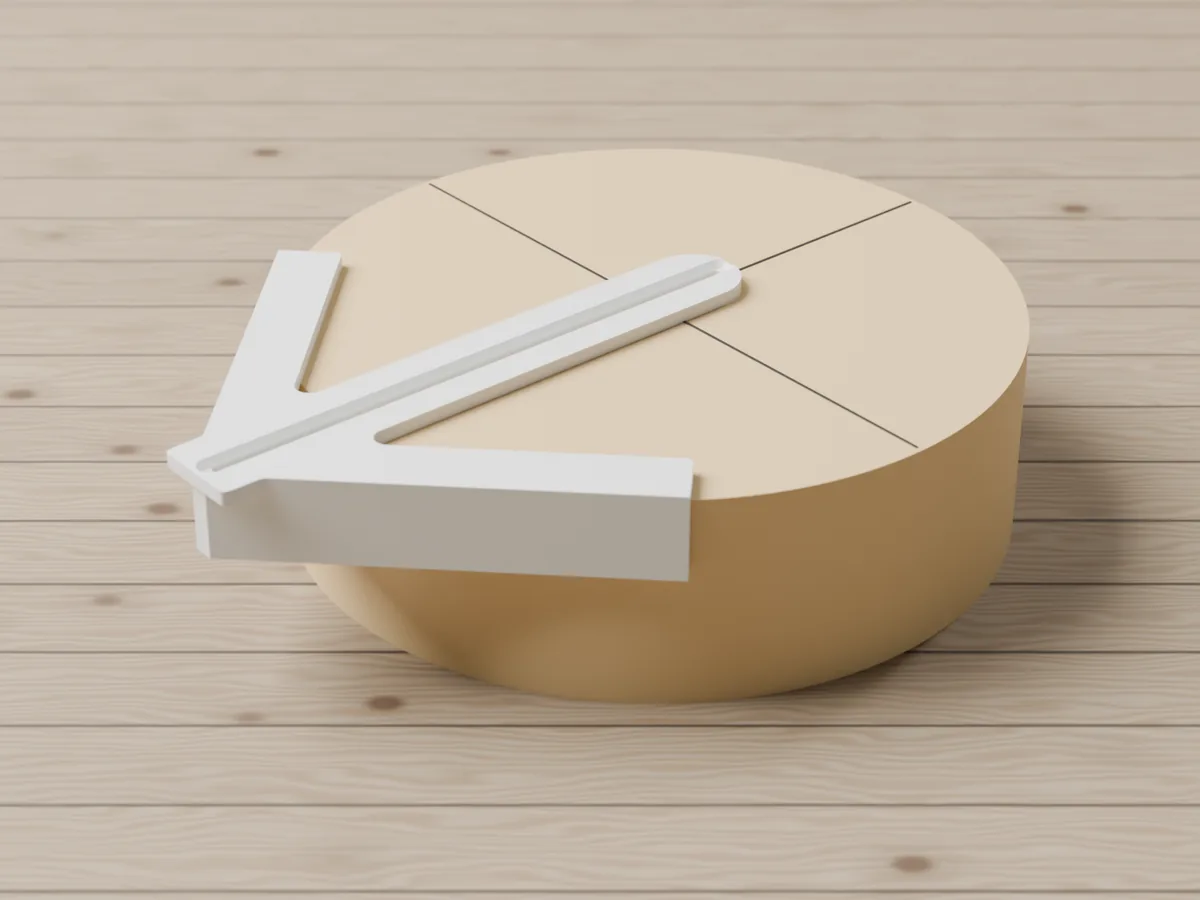
The method is the same, with a bigger finder. Rest the plate on the face of the blank, with the walls hanging down over the rim, push them against the rim, scribe, turn a quarter turn and scribe again. The crossing is where the tailstock centre, a faceplate or a screw chuck goes.
Pick the finder that is at least as big as your largest blank: 5 in (127 mm), 8 in (203 mm) or 12 in (305 mm). A bigger finder on a smaller blank works. A smaller finder on a bigger blank does not, because the arm has to reach the centre. For a square blank, draw the diagonals from corner to corner instead.
The tools for this job
- Woodworking · Layout
Board centering discs
Find the centre of a board's edge with one pencil mark and no measuring.
from $14.45 CADfrom $10.95 USD
- Woodworking · Layout
Dowel center finder
Find the centre of a dowel or small round stock with a pencil and nothing else.
$6.45 CAD$4.95 USD
- Woodworking · Layout
Bowl blank center finder
Find the centre of a round bowl blank for the lathe with a pencil and nothing else.
from $11.45 CADfrom $8.95 USD
Every tool ships to Canada and the US. Orders of $50 or more ship free, and you have 30 days to return anything.
Questions
How do I find the center of a board edge without measuring?
Set a centering disc on the edge with one leg on each face and mark through the hole. Lift the disc, turn it half a turn and mark again. If the marks land on one line, the board is centred.
Can I use a wooden pencil with a centering disc?
No. The hole is 0.08 in (2 mm), so it takes a scribe, an awl or mechanical-pencil lead.
How do I find the center of a dowel?
Rest a center finder on the end of the dowel with the walls hanging over the sides, push the walls against it and scribe the slot. Turn it about a quarter turn and scribe again. The lines cross at the centre.
Do the two lines have to be at exactly 90 degrees?
No. Each line already passes through the centre, so any two lines about a quarter turn apart cross there.
What is the biggest bowl blank a center finder handles?
The 12 in finder takes round blanks up to 12 in (305 mm) across. The 5 in and 8 in finders take blanks up to 5 in and 8 in.
More guides
- Drill a straight hole without a drill press
The hardest part of drilling by hand is keeping the bit square. Eyeballing it leaves holes that lean, and the lean shows when a dowel or a screw goes in.
- Drill holes to the same depth every time
Blind holes, dowel joints and shelf-pin holes all want the same depth, hole after hole.
Not sure which tool fits your job?
Tell me what you are making and the sizes you own, and I will say which one fits. If you need a jig that does not exist yet, I design those too.
Email me Next guide: Drill a straight hole without a drill press