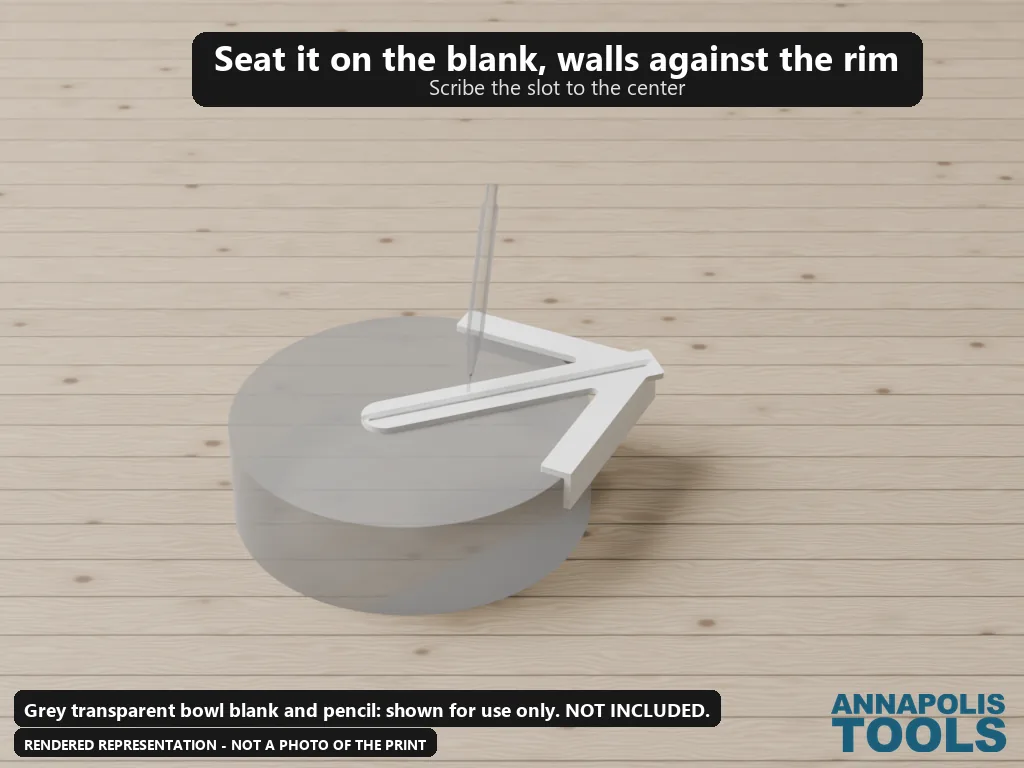
 1 / 8
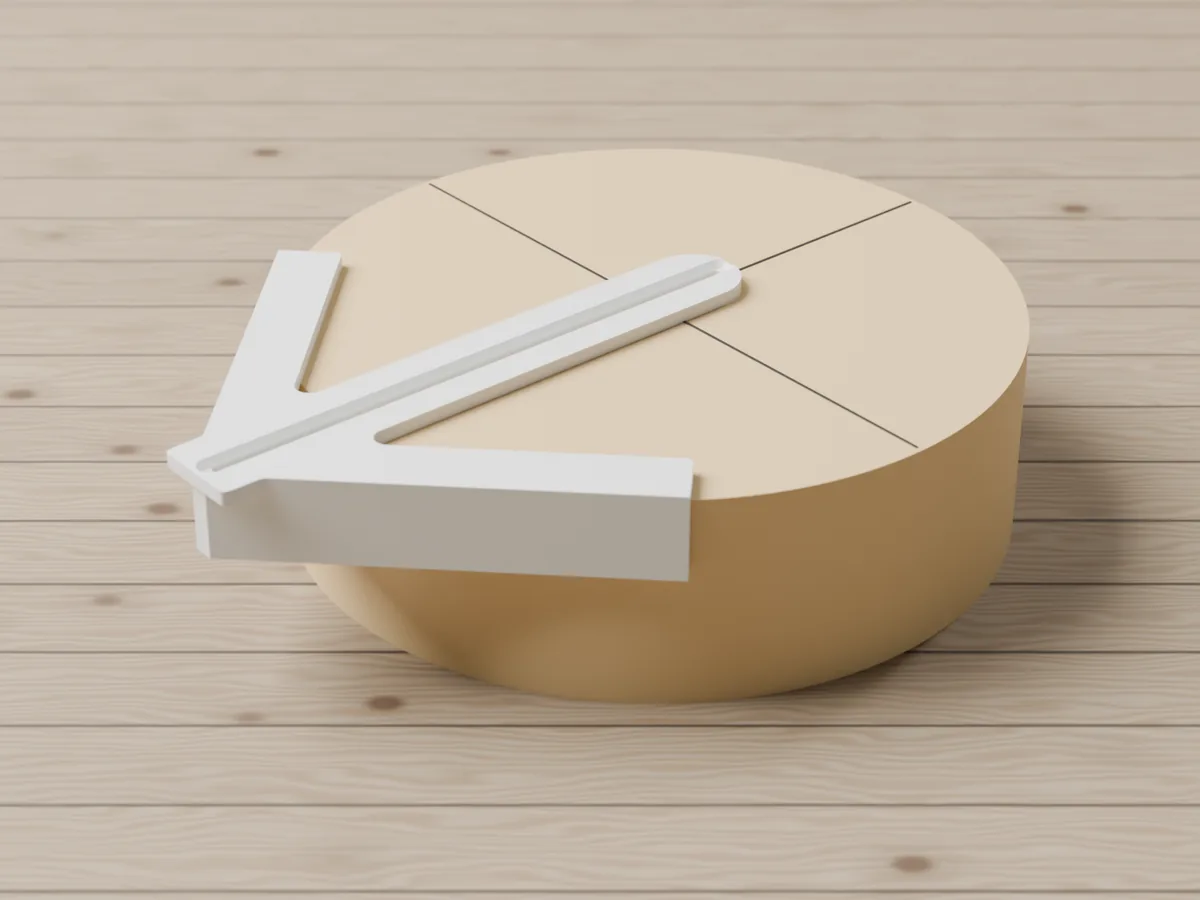
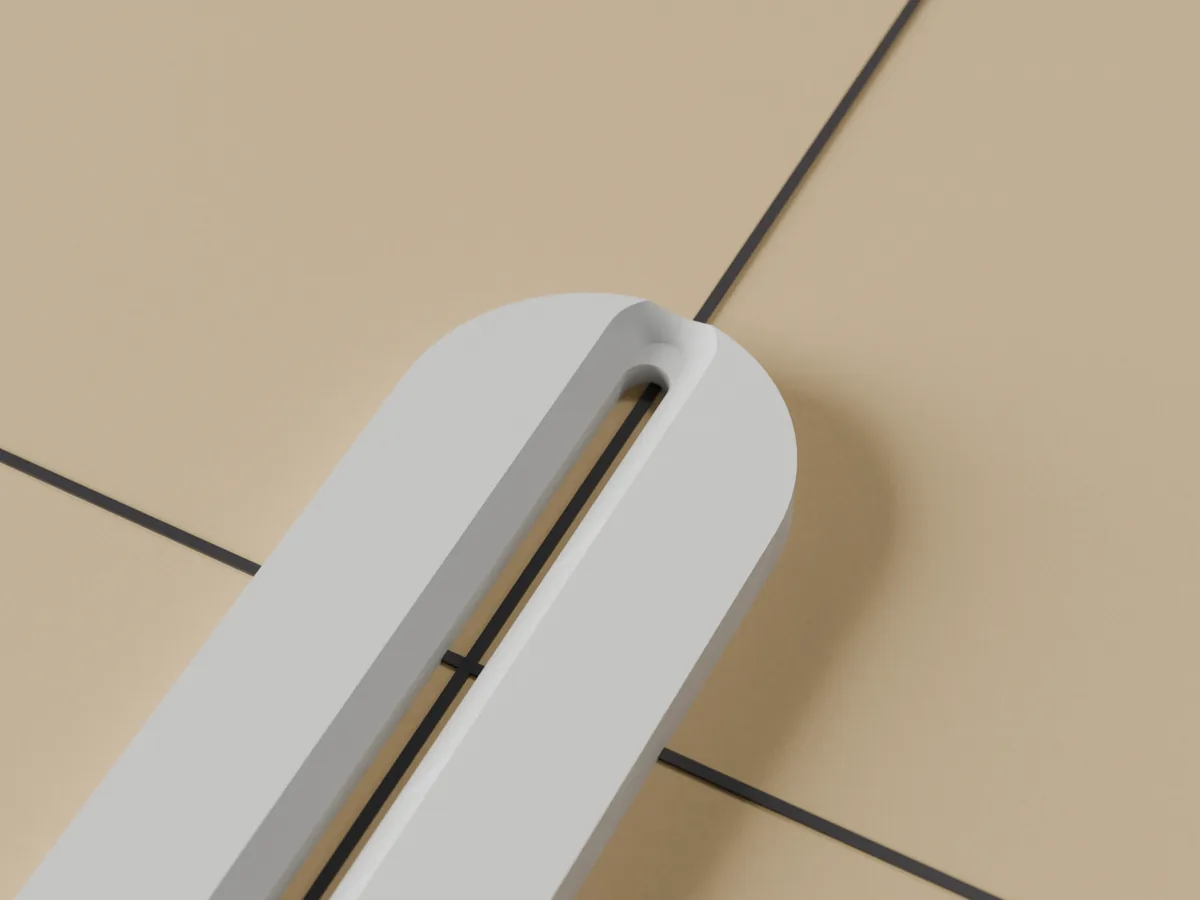
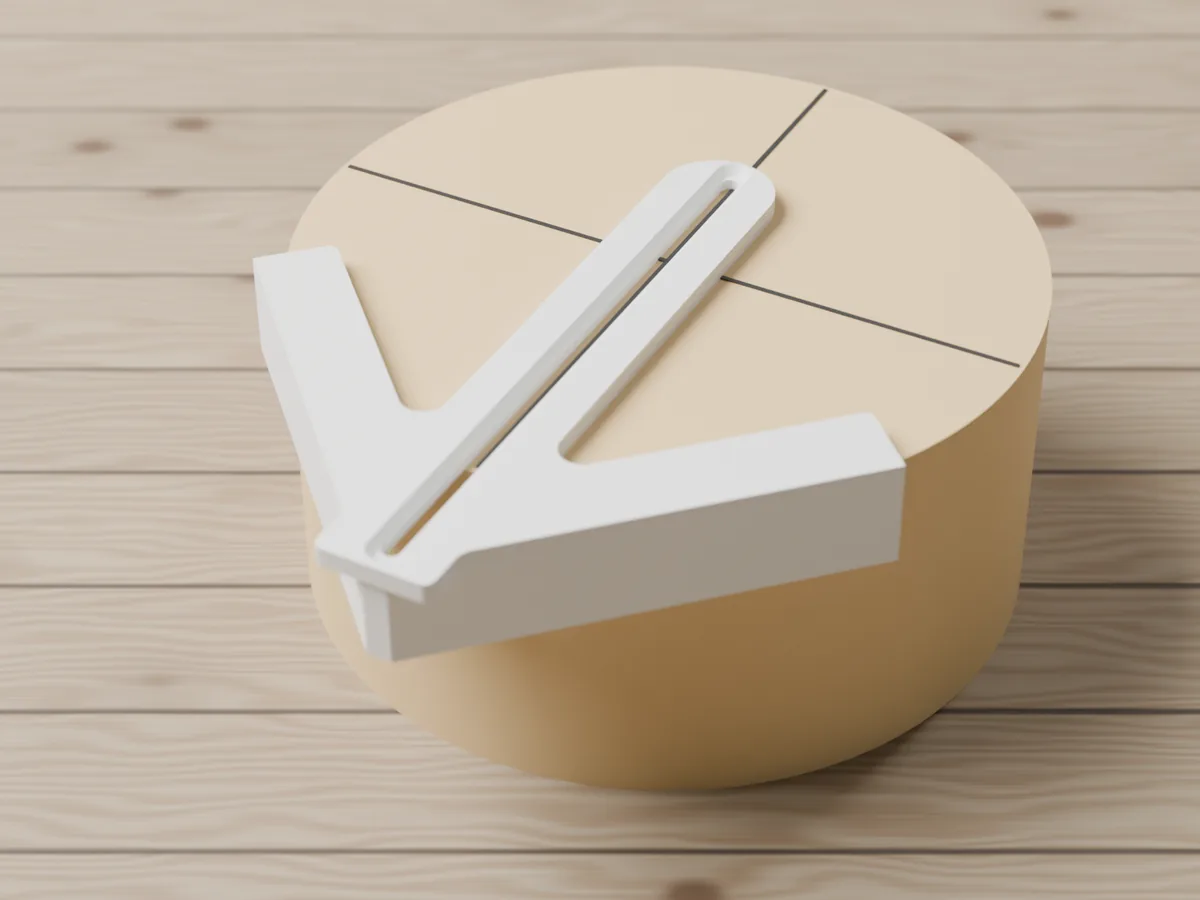
Design renders. Photos of the finished tool will follow. The bowl blanks and pencils shown in the pictures are not included.
Woodworking tools · Layout
Bowl blank center finder
Mark the exact center of a round bowl blank so you can mount it on the lathe. Two pencil lines, no compass and no arithmetic, on blanks up to 5, 8 or 12 in (127, 203 or 305 mm) across. The best part: the two lines do not have to cross at 90 degrees. Any two lines about a quarter turn apart will do.
$20.45 CAD
- Two pencil lines cross at the center of the blank: no rule, no compass, no arithmetic
- 5, 8 and 12 in sizes, for round blanks up to 5, 8 and 12 in (127, 203 and 305 mm) across
- The two lines do not have to be at 90 degrees: any two about a quarter turn apart will do
- A 3.2 mm slot, wide enough for a pencil or a flat carpenter pencil to leave a clear mark
- Designed in Canada by Christopher Ross, in plastic
Pick the size that is at least as big as your largest blank; a bigger finder works on a smaller blank, but a smaller one does not work on a bigger blank. More detail below.
- Ships from Canada to addresses in Canada and the US the next business day
- Free shipping on orders of $50 or more; otherwise it is worked out in your cart
- 30-day returns on every tool (details)
- Secure checkout by Stripe
- In the box
- One finder in the size you choose: 5, 8 or 12 in
- Fits
- Round blanks up to 5 in (127 mm), 8 in (203 mm) or 12 in (305 mm) across
- Material
- PETG, 3.2 mm (0.13 in) pencil slot, 20 mm (0.8 in) walls
- Not included
- The blank and pencil
- Ships to
- Canada and the US
See it up close
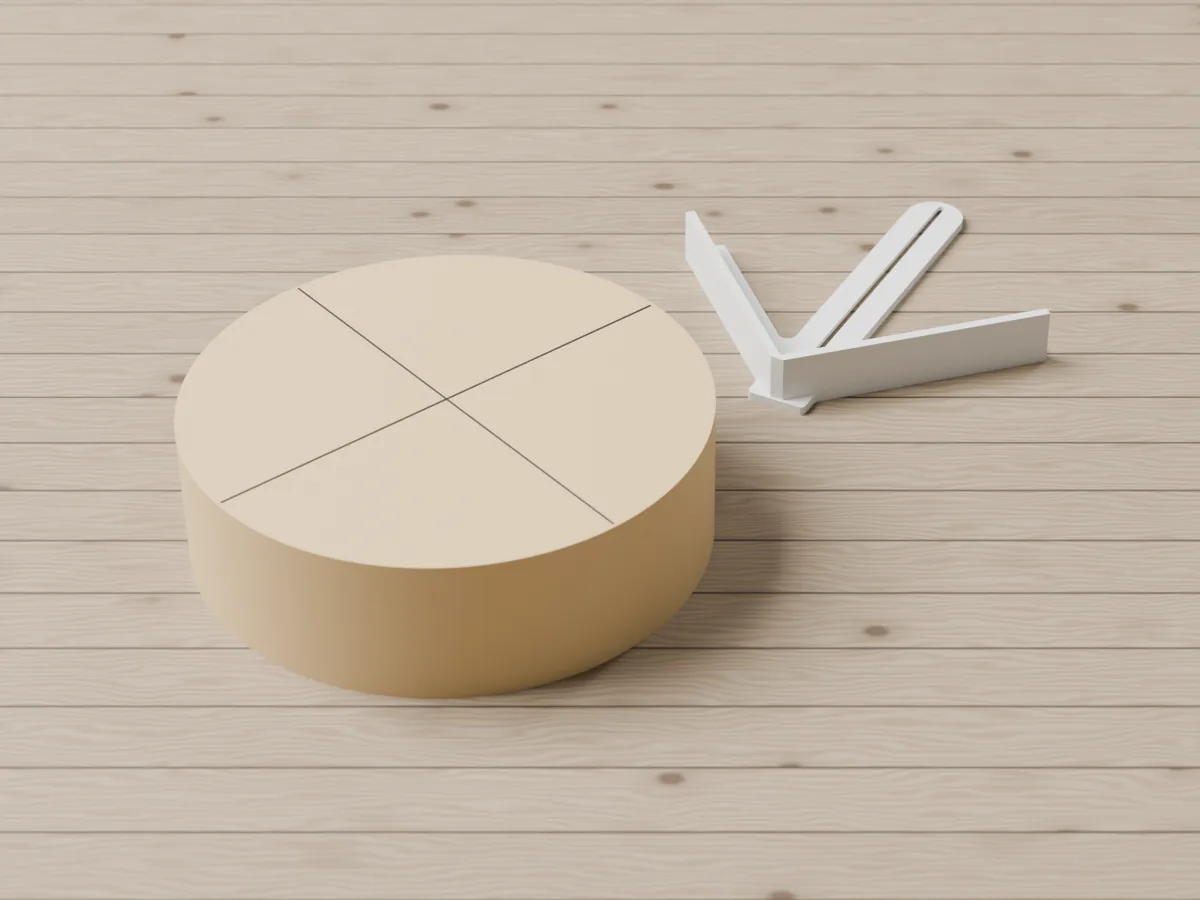
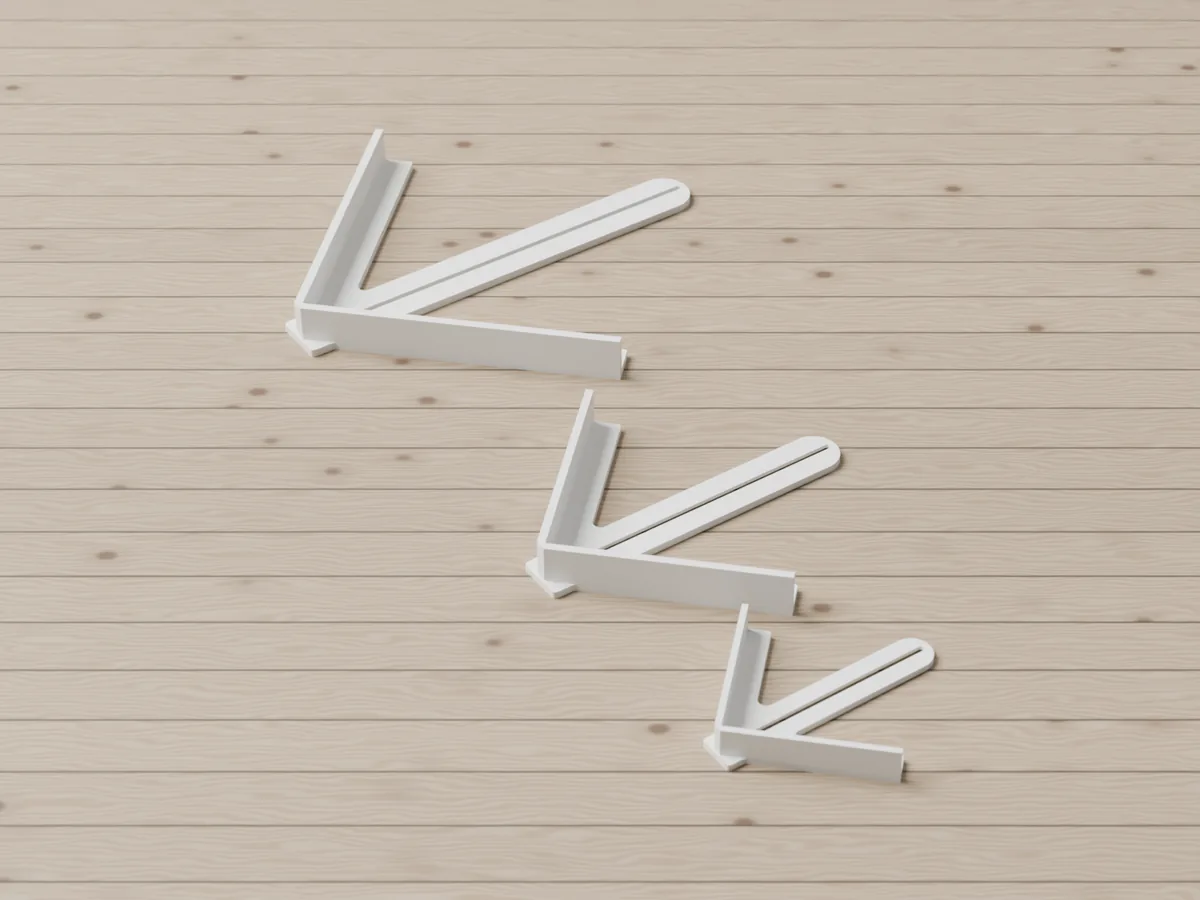
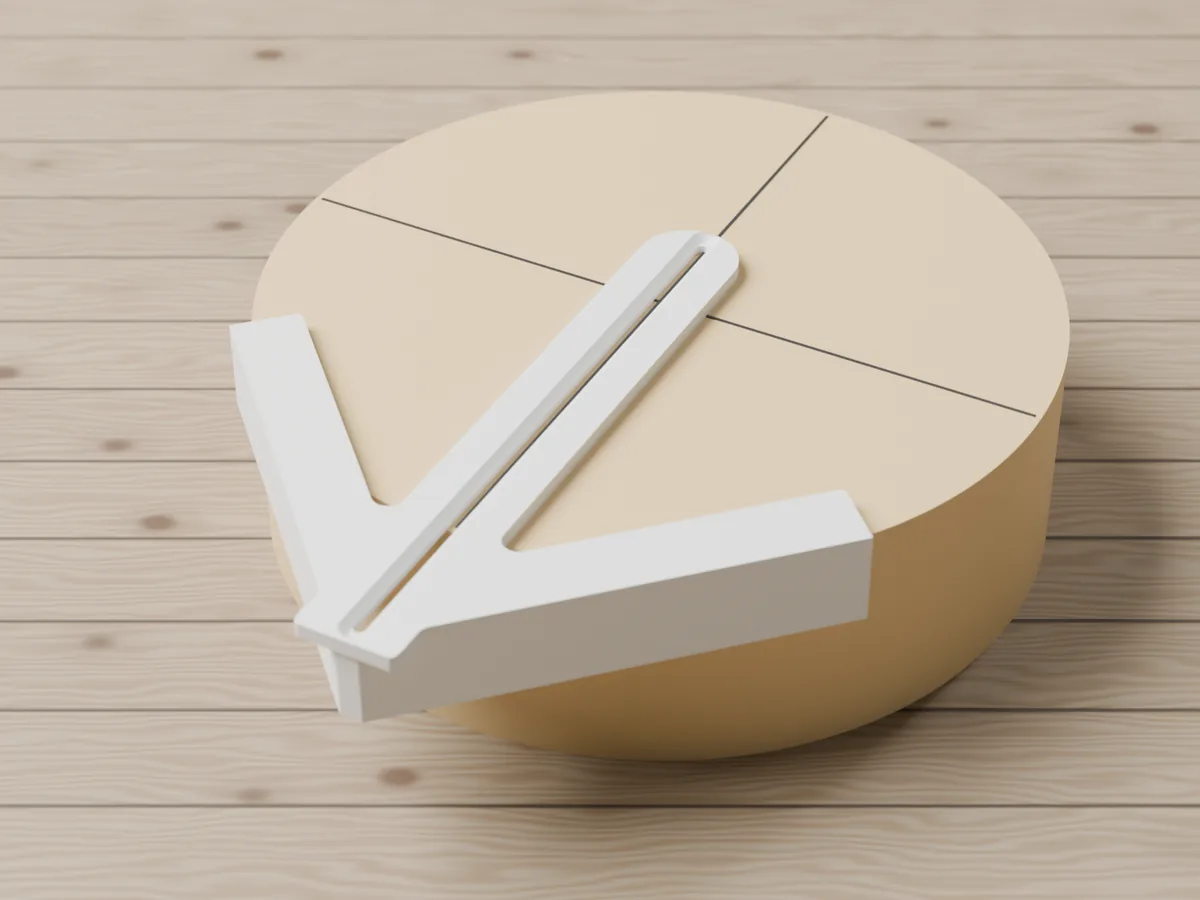
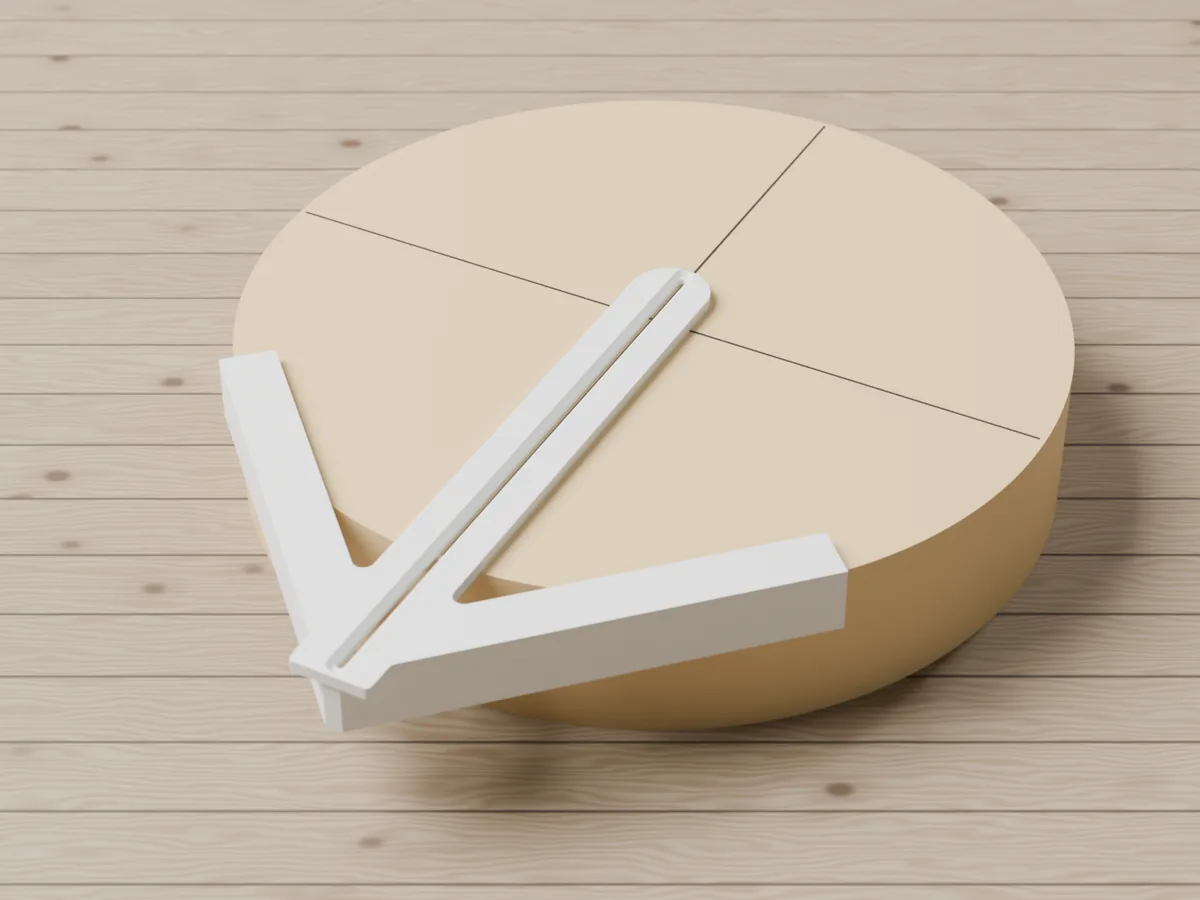
Find the exact centre of a round bowl blank with a pencil and nothing else. Push the two walls against the rim, scribe the slot, turn a quarter turn and scribe again. Where the lines cross is the centre, ready for a faceplate, a screw chuck or the tailstock centre.
Why it's quick
Bowl blanks come as band-sawn or cut circles in every diameter. Finding the centre usually means a compass, a rule and a few tries. This needs a pencil. There is no scale to read and nothing to adjust, so the same finder works on every blank up to its size.
It works because the two walls sit at exactly 90 degrees. Pushed against the sides of a round, they touch it along two tangents, and the line that splits the angle between them always passes through the centre. The slot sits on that line.
The lines do not have to be square
Each line you scribe already runs through the centre by itself, so the angle between two lines does not change where they cross. Turn the finder roughly a quarter turn between the two marks, by eye, with no protractor and no careful measuring. A quarter turn just gives the cleanest crossing to read; two lines very close together make a long, blurry crossing, so avoid that.
How to use it
- Rest the plate on the face of the blank, with the two walls hanging down over the rim.
- Push the walls against the rim so both touch. The slot now runs along a diameter.
- Scribe along the slot with a pencil. The line runs from the rim to just past the centre.
- Turn the finder about a quarter turn and scribe again. The two lines cross at the centre.
That crossing is where you set the tailstock, a faceplate or a screw chuck.
Choosing a size
| Finder | Round blanks up to | Good for |
|---|---|---|
| 5 in | 5 in (127 mm) across | Small bowls, lidded boxes, ornaments and hollow-form blanks |
| 8 in | 8 in (203 mm) across | Small and medium bowls, platters, hollow-form blanks |
| 12 in | 12 in (305 mm) across | Large bowls and platters |
Pick the size that is at least as big as your largest blank. A bigger finder on a smaller blank works, but a smaller finder on a bigger blank does not, because the arm has to reach the centre. For dowels and small round stock, see the Dowel center finder.
Pairs well with
Mark the centre with the finder, then drill a pilot hole for a screw chuck or set the tailstock point in it.
Details
- PETG, with a 3.2 mm (0.13 in) slot that takes a pencil or a flat carpenter pencil and leaves a readable line.
- The slot is widened on the face the pencil enters so the tip drops in.
- The walls are 20 mm (0.8 in) tall and the arm reaches the centre of the blank with room to mark past it.
- A web at the corner stiffens the joint between the walls and the arm.
- I design these myself, and the wall faces are modelled at exactly 90 degrees.
Questions
Which size bowl blank center finder do I need?
Pick the size that is at least as big as your largest blank: the 5 in takes round blanks up to 5 in (127 mm) across, the 8 in up to 8 in (203 mm), and the 12 in up to 12 in (305 mm).
Can I use a bigger finder on a smaller blank?
Yes. A bigger finder on a smaller blank works, but a smaller one on a bigger blank does not, because the arm has to reach the centre.
How do you find the center of a bowl blank?
Rest the plate on the face of the blank with the walls hanging down over the rim, push the walls against it and scribe along the slot. Turn the finder about a quarter turn and scribe again; the two lines cross at the centre.
Do the two lines have to be at exactly 90 degrees?
No, and that is the best part. Each line already passes through the centre of the blank, so any two lines that are about a quarter turn apart cross at the centre. Turn the finder roughly a quarter turn and scribe again; you do not need to be exact.
Why does it find the centre every time?
The two walls sit at exactly 90 degrees, so they touch the rim along two tangents, and the line that splits the angle between them always passes through the centre. The slot sits on that line.
What do I mark with?
A pencil or a flat carpenter pencil. The slot is 3.2 mm (0.13 in) wide and widened on the face the pencil enters, so the tip drops in.
Does it work on a square blank?
No. It is made for round blanks. For square stock, draw the diagonals corner to corner.
Compare with similar tools
| Tool | What it does | Job | Price |
|---|---|---|---|
| Bowl blank center finder | Find the centre of a round bowl blank with a pencil and nothing else. | Layout | from $20.45 CADfrom $15.95 USD |
| Dowel center finder | Find the centre of a dowel or small round stock with a pencil and nothing else. | Layout | $6.45 CAD$4.95 USD |
| Board centering discs | A thin disc with two legs that straddle a board. | Layout | $14.45 CAD$10.95 USD |
| V-block drill guide | One block, three jobs: seat it on a dowel, a flat face or a square corner, pick the hole that matches your bit and drill square, centred or at 45 degrees. | Drilling | from $15.95 CADfrom $11.95 USD |
| 90 degree drill guide | Hold a drill bit square to the work without a drill press. | Drilling | $14.45 CAD$10.95 USD |
Ordering, shipping and returns
- Paying. Add what you want to the cart, then check out on Stripe's hosted page. Choose CAD or USD with the toggle; the price at checkout is the price you pay.
- Shipping. I ship from Canada to addresses in Canada and the US, and orders ship the next business day after payment. Shipping is the actual postage (Canada Post or USPS), worked out from the weight and size of the parcel and your postal code or ZIP, and it is shown in your cart before you pay. Orders of $50 or more ship free. I cover customs and duties on US orders, so the price at checkout is all you pay.
- Returns. You have 30 days from delivery to return a tool. Write to me through the contact page first and I'll tell you where to send it. If a part arrives damaged or doesn't match what's listed, the terms say what happens next.
- About the pictures. They are renders of the design. Photos of the finished tools will be added once the first batches are made.
Guides for this tool
Related products
- Drilling
V-block drill guide
One block, three jobs: seat it on a dowel, a flat face or a square corner, pick the hole that matches your bit and drill square, centred or at 45 degrees.
from $15.95 CADfrom $11.95 USD
- Drilling
90 degree drill guide
Hold a drill bit square to the work without a drill press.
$14.45 CAD$10.95 USD
More tools are on the shop page.