How to drill a straight hole without a drill press
The hardest part of drilling by hand is keeping the bit square. Eyeballing it leaves holes that lean, and the lean shows when a dowel or a screw goes in.
Press a drill guide flat on the work with its V-groove over your mark, lay the bit in the groove and drill. The guide holds the bit at 90 degrees. For a hole through the middle of a dowel, or at 45 degrees into a corner, use a V-block guide instead.
Square to a wall or a board
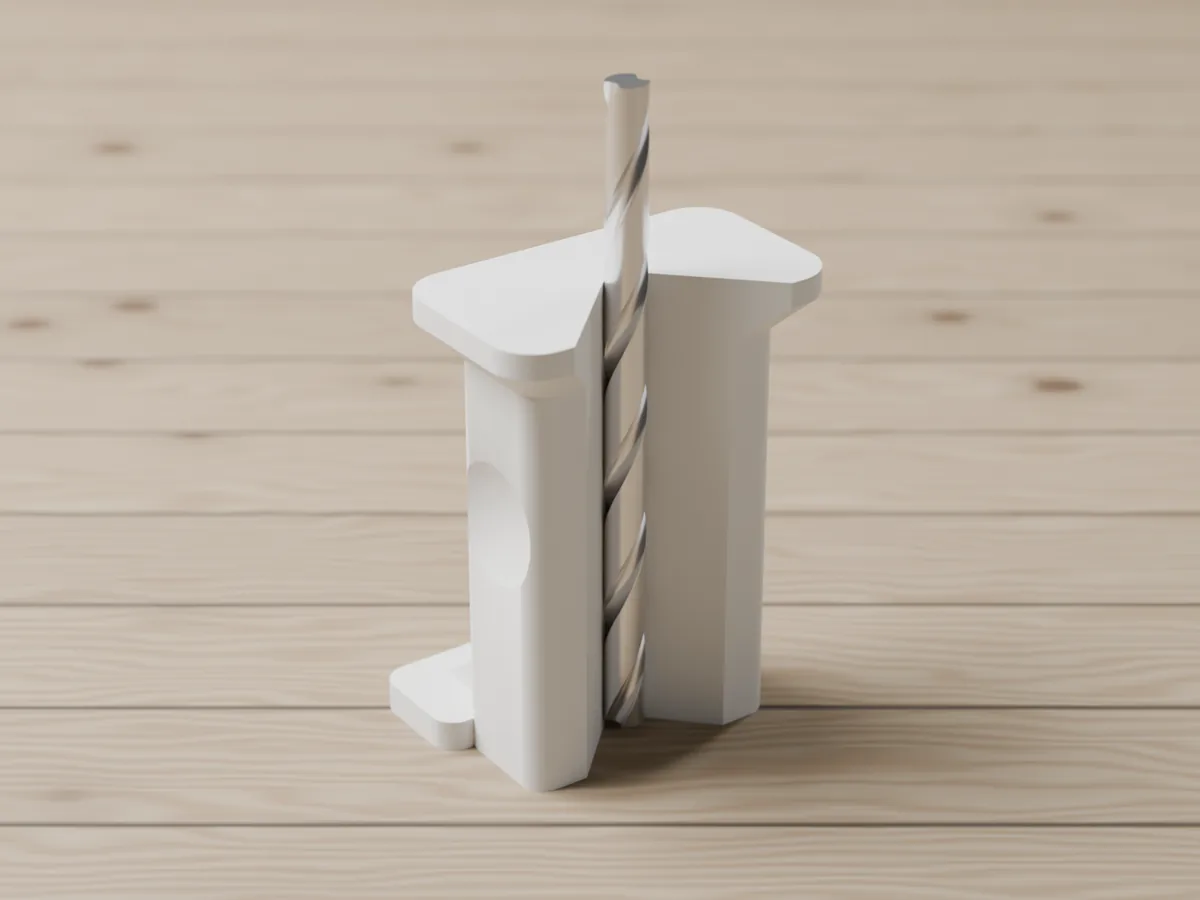
A drill guide does the aiming. The groove holds the bit, and the foot and the end of the rib sit flat on the surface, so the bit cannot tip toward you or sideways.
- Mark the hole.
- Press the foot and the end of the rib flat on the wall or board, with the groove over your mark.
- Lay the bit in the V-groove with its tip on the mark. The two walls of the V centre the bit, whatever its size. The guide takes any twist bit from 1/8 to 1/2 in (3 to 13 mm).
- Start the drill at a moderate speed and push in, keeping the guide pressed flat with your other hand.
- Once the hole has started, carry on or lift the guide away.
Keep your fingers behind the guard plate at the far end. It is wider than the rib on every side, so if your hand slips it meets the plate and not the spinning flutes. The groove holds the bit by touch and does not clamp it. It is for starting holes and drilling in wood. The bit spins against plastic, so the groove wears in over time, which is why it is not for production work or metal.
Through the middle of a dowel
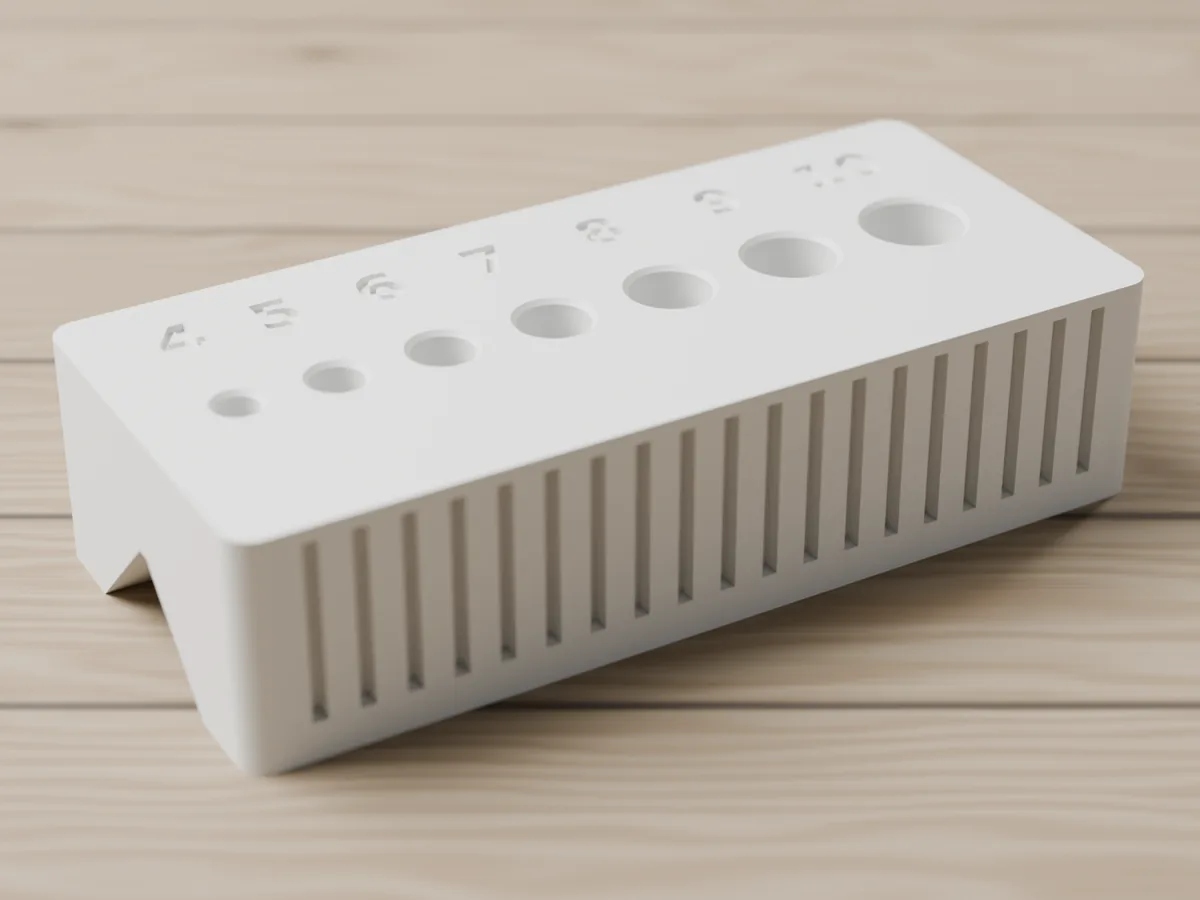
Drilling straight into the end of a dowel, or across it, is easy to say and hard to do by eye. A V-block drill guide has holes sized for common bits. Sit the V on top of a dowel, branch or post and the hole is centred over the stock, whatever its diameter, and runs straight through the middle of it. Choose the hole that matches your bit (the size is engraved beside each one), drop the bit in and drill.
At 45 degrees into a corner
Seat the V over the corner or edge of square stock. The hole runs along the corner's bisector, 45 degrees to both faces. To drill square to a flat face instead, stand the block on its feet on the board and the hole is at 90 degrees to the face.
The holes are 0.47 in (12 mm) deep above the point of the V, which is enough to keep a bit straight. Each hole is 0.01 in (0.3 mm) larger than its label so a bit does not bind. Metric blocks have 4 to 10 mm holes and imperial blocks have 1/8 to 1/2 in holes, so choose the block that matches your bits.
Then control the depth
A square hole is only half of a good dowel joint. The other half is depth. See how to drill holes to the same depth.
The tools for this job
- Woodworking · Drilling
90 degree drill guide
Hold a drill bit square to the work without a drill press.
$14.45 CAD$10.95 USD
- Woodworking · Drilling
V-block drill guide
One block, three jobs: seat it on a dowel, a flat face or a square corner, pick the hole that matches your bit and drill square, centred or at 45 degrees.
from $15.95 CADfrom $11.95 USD
- Woodworking · Drilling
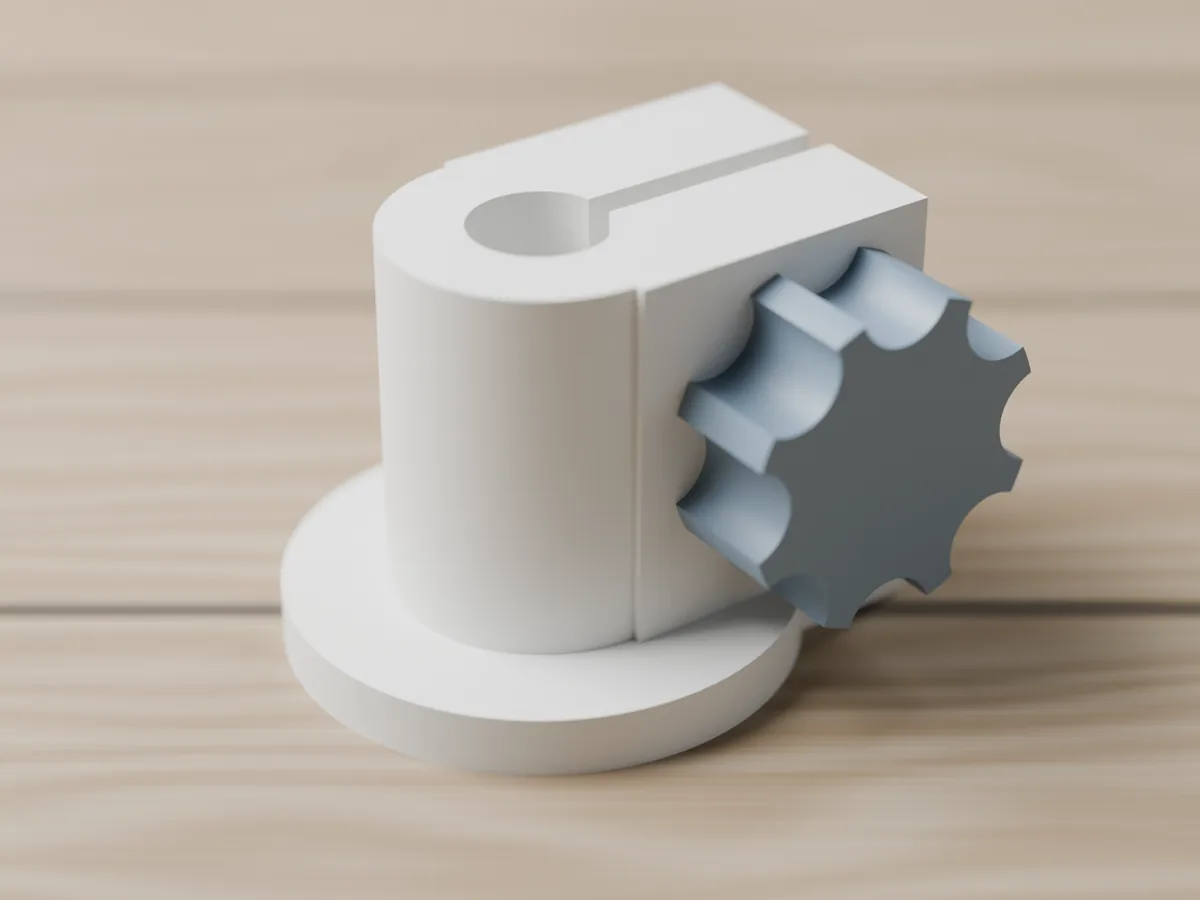
Drill bit depth stop
Drill to the same depth every time.
from $6.45 CADfrom $4.95 USD
Every tool ships to Canada and the US. Orders of $50 or more ship free, and you have 30 days to return anything.
Questions
How do I drill a straight hole with a hand drill?
Press a drill guide flat on the work with the groove over your mark, lay the bit in the V-groove with its tip on the mark and start the drill at a moderate speed. The bit goes in at 90 degrees.
What bit sizes does a drill guide take?
Any twist bit from 1/8 to 1/2 in (3 to 13 mm). The two walls of the V centre the bit whatever its size.
How do I drill straight through the center of a dowel?
Sit a V-block drill guide on top of the dowel. The hole is centred over the stock whatever its diameter and runs straight through the middle of it.
How do I drill a 45 degree hole into a corner?
Seat the V of a V-block guide over the corner or edge of square stock. The hole runs along the corner bisector, 45 degrees to both faces.
Can I use these guides on metal?
They are made for woodworking and general shop use. The bit spins in a plastic hole, so use a moderate speed and expect the holes to wear in over time.
More guides
- Drill holes to the same depth every time
Blind holes, dowel joints and shelf-pin holes all want the same depth, hole after hole.
- Find the center of a board, dowel or bowl blank
Three jobs, one idea: let the tool find the middle so you do not have to measure and divide.
Not sure which tool fits your job?
Tell me what you are making and the sizes you own, and I will say which one fits. If you need a jig that does not exist yet, I design those too.
Email me Next guide: Drill holes to the same depth every time