 1 / 7
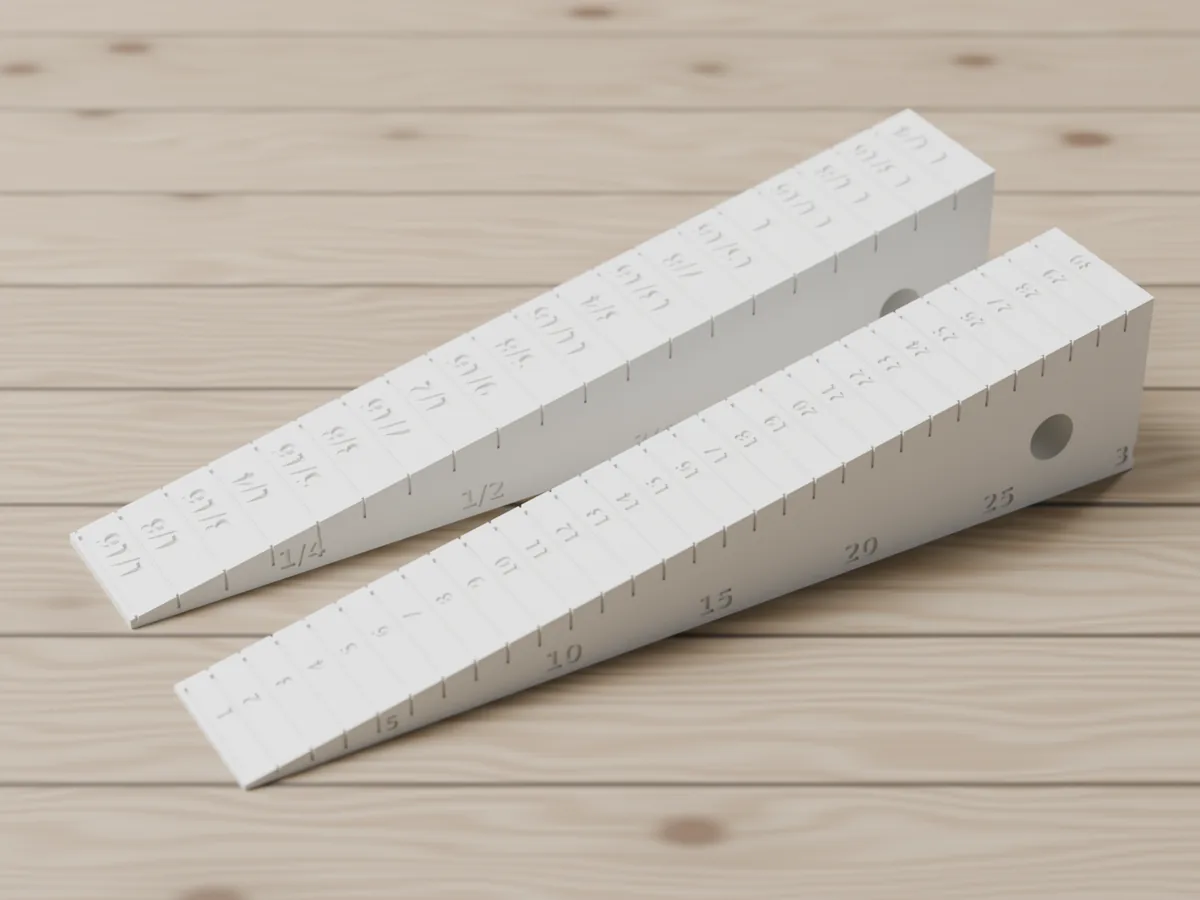
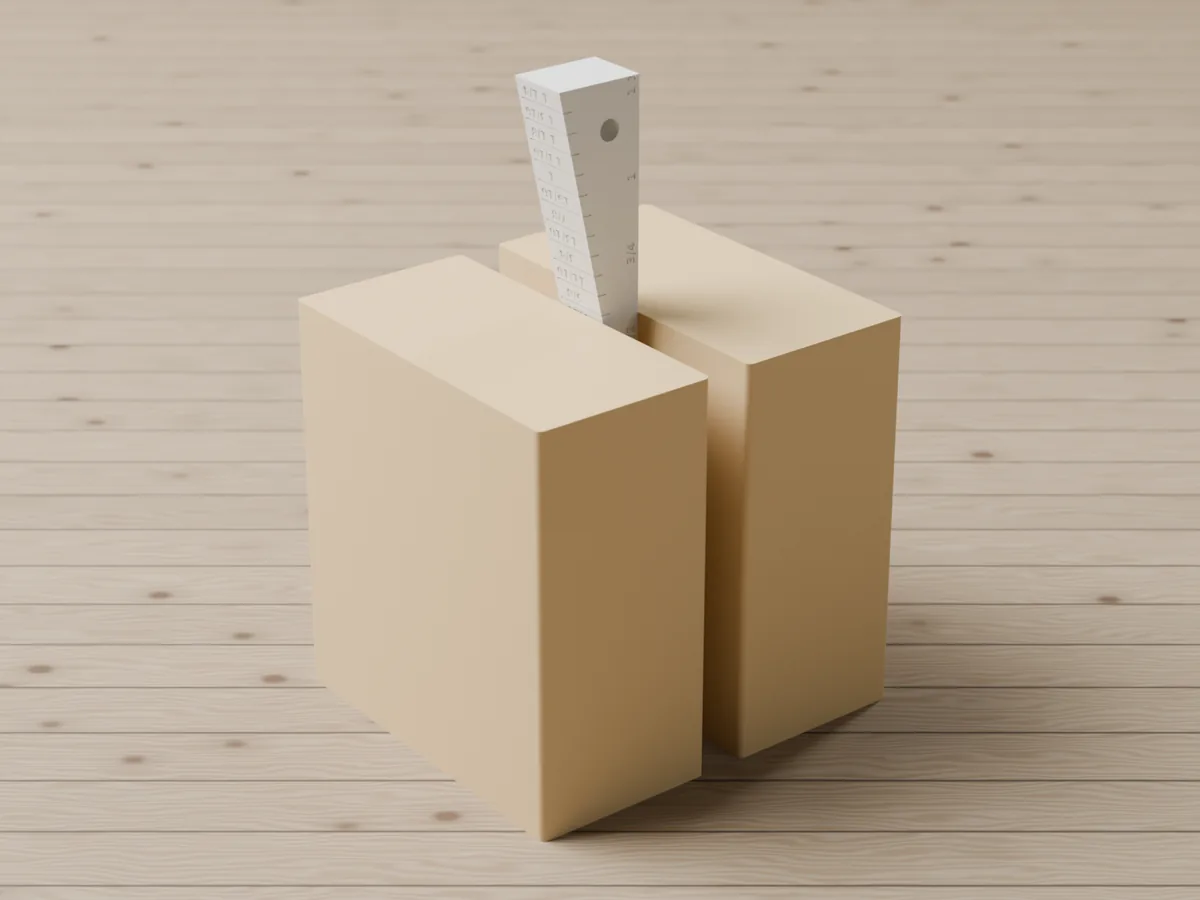
Design renders. Photos of the finished tool will follow. The boards shown in the pictures are not included.
Woodworking tools · Measuring
Gap gauge
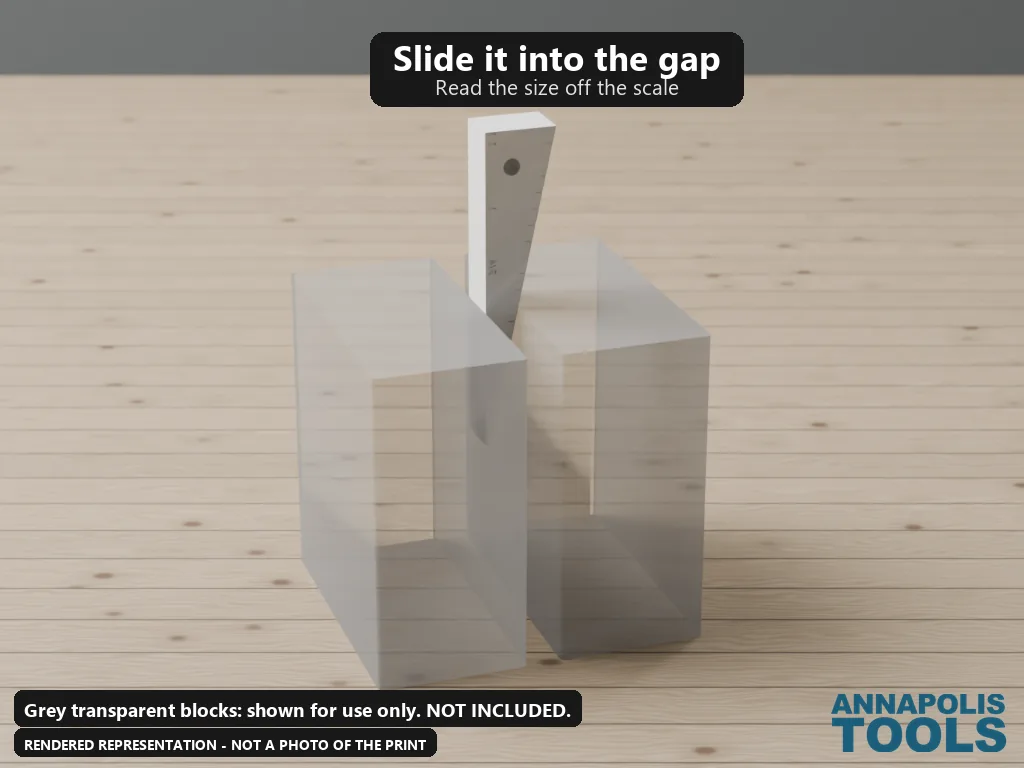
Measure a gap by sliding the taper in until it stops and reading the line at the opening. Metric 1 to 30 mm or imperial 1/16 to 1 1/4 in, with a line at every step.
$29.95 CAD
- Slide it into a gap and read the size where it stops: no feeler blades and no guessing
- Metric reads 1 to 30 mm with a line at every millimetre, imperial 1/16 to 1 1/4 in with a line at every sixteenth
- The scale is on both side faces and the sloped face, and the marks are recessed so they won't rub off
- Designed in Canada by Christopher Ross, in plastic, 150 mm (5.91 in) long
Pick the units you work in, or get the pair, which costs about 10% less than two gauges. The two gauges are the same shape. More detail below.
- Ships from Canada to addresses in Canada and the US the next business day
- Free shipping on orders of $50 or more; otherwise it is worked out in your cart
- 30-day returns on every tool (details)
- Secure checkout by Stripe
- In the box
- One gauge, or the metric and imperial pair
- Range
- 1 to 30 mm (0.04 to 1.18 in), or 1/16 to 1 1/4 in (1.6 to 31.8 mm)
- Material
- PETG, 150 mm (5.91 in) long
- Not included
- The boards
- Ships to
- Canada and the US
See it up close
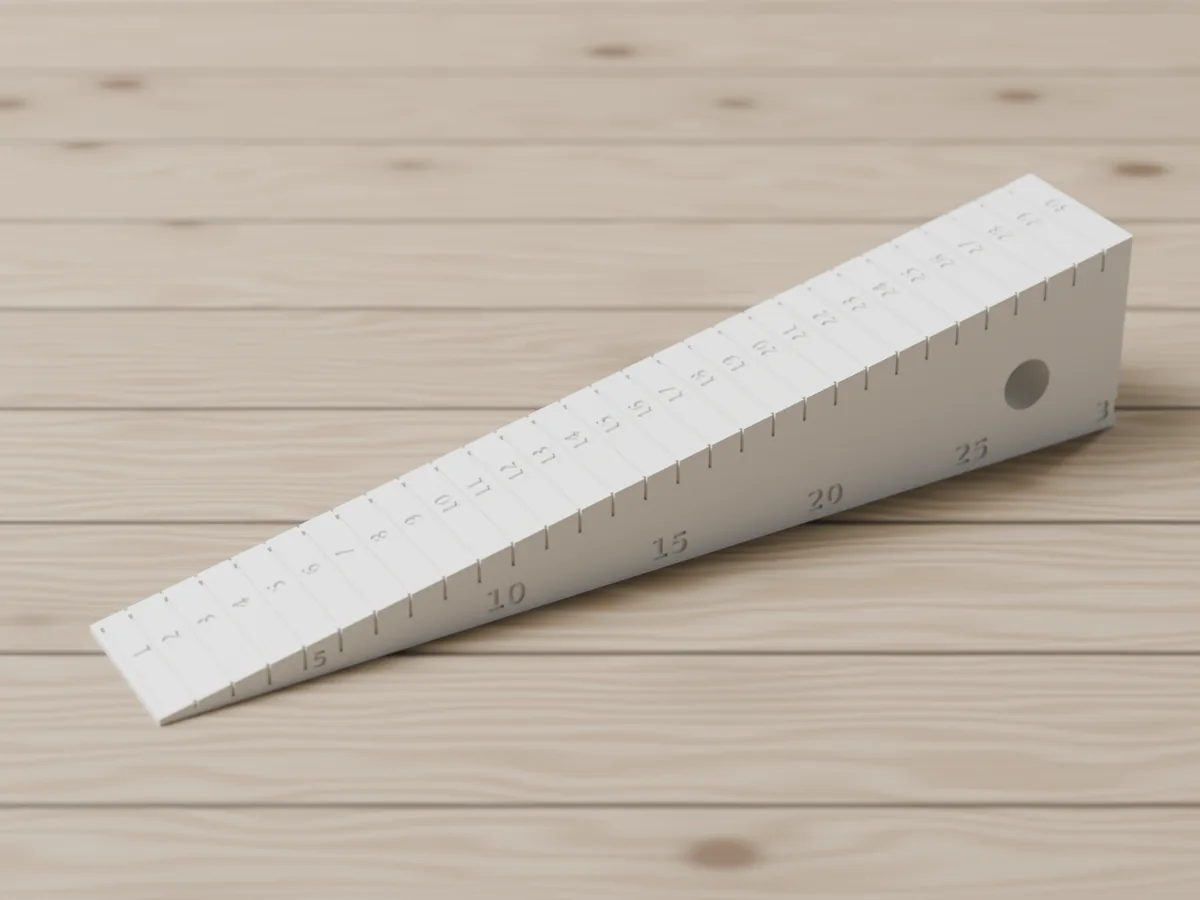
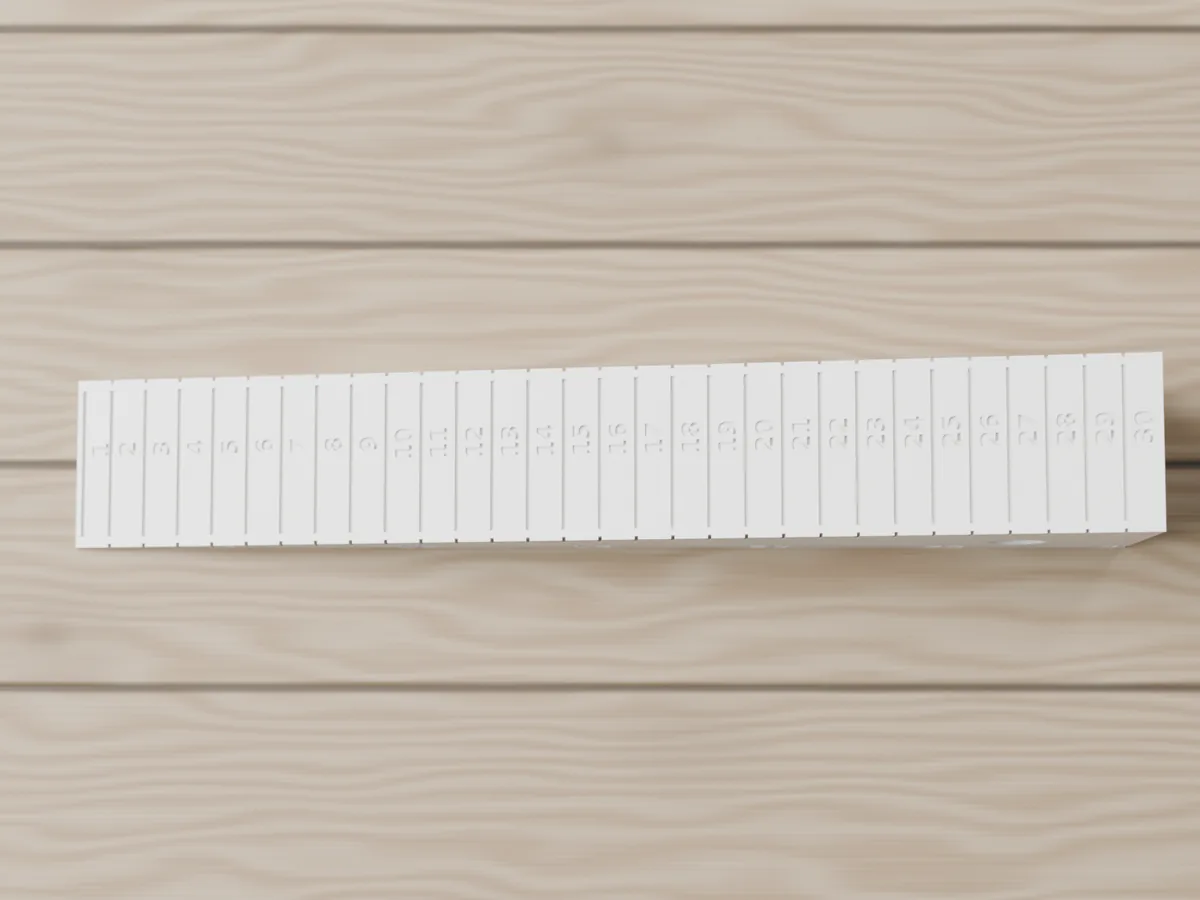
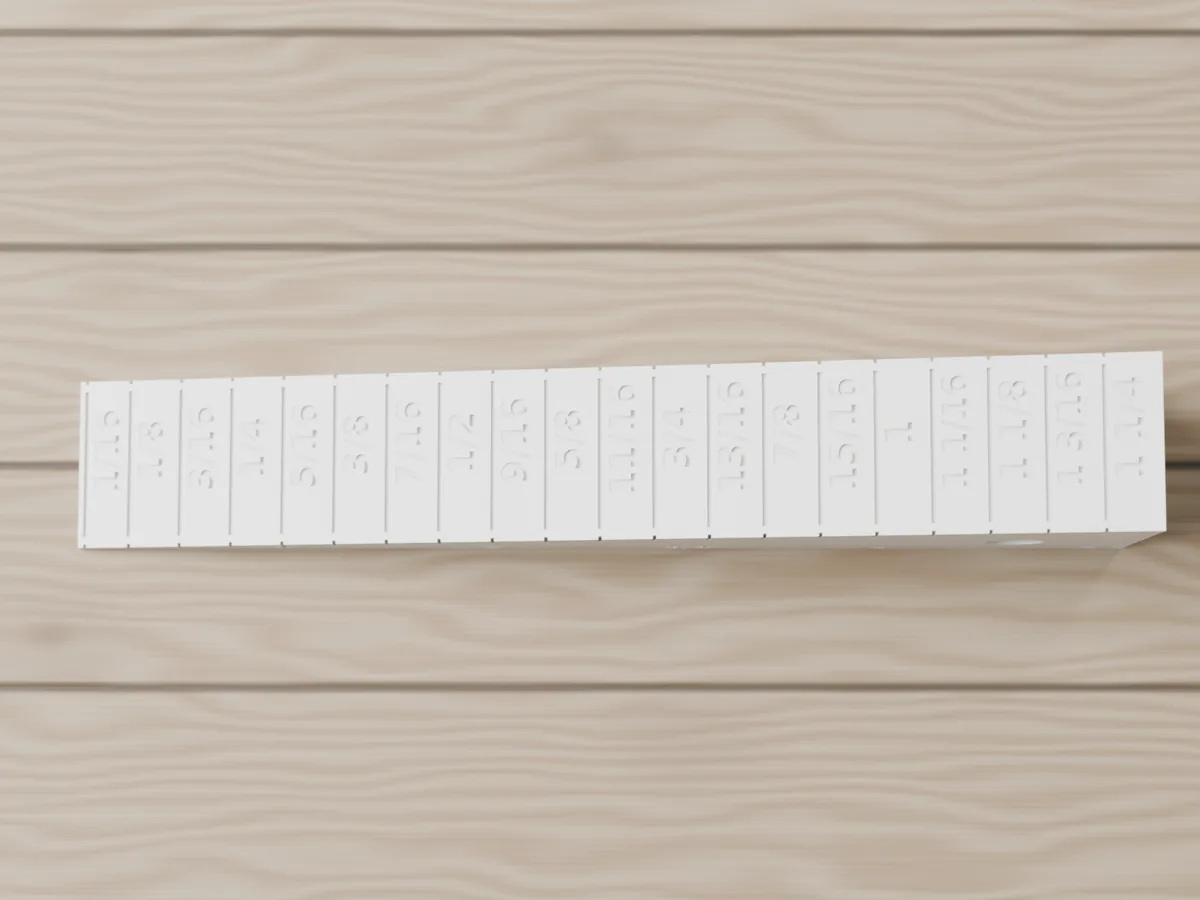
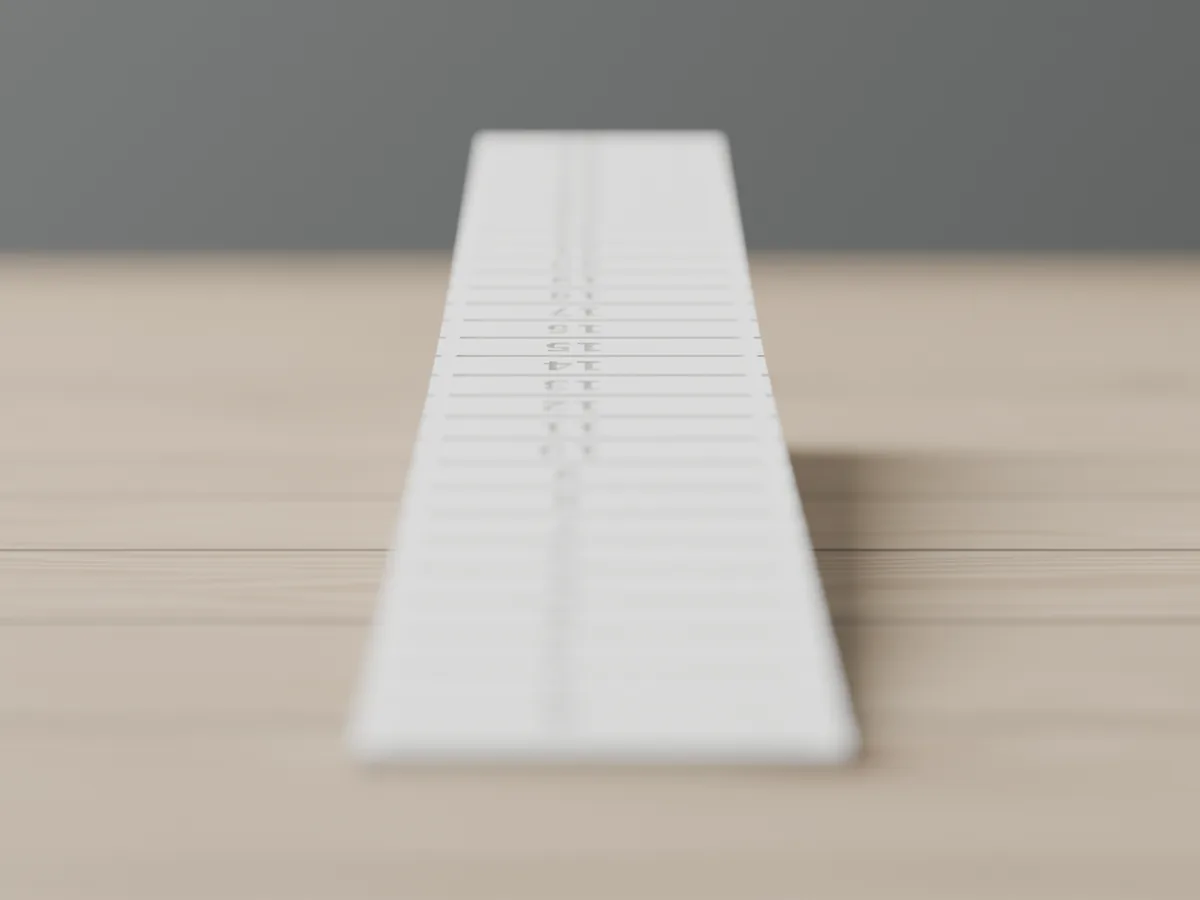
Slide it into a gap and read the size off the scale. Metric 1 to 30 mm (0.04 to 1.18 in) or imperial 1/16 to 1 1/4 in (1.6 to 31.8 mm), with a line at every step.
Why it earns its place
A tape measure doesn't fit in a narrow gap, and a stack of feeler blades or drill bits takes a few tries. This gauge is a long taper: the tip goes in anywhere, and the wedge stops where the gap closes on it. Read the line at the edge of the opening and you have the size, without guessing.
How to use it
- Hold the gauge tip first, with its flat face against one side of the gap.
- Slide it in until it stops snug. Don't force it, or you'll read a gap wider than it is.
- Read the line at the edge of the opening. The scale is on both side faces, so you can read it from either side, and it is repeated on the sloped face for a gap you can see from above.
- Each number sits just past its line, toward the thick end.
Which one
The metric gauge reads 1 to 30 mm (0.04 to 1.18 in) with a line at every millimetre. The imperial gauge reads 1/16 to 1 1/4 in (1.6 to 31.8 mm) with a line at every sixteenth. They are the same shape, so pick the units you work in, or get the pair.
Pairs well with
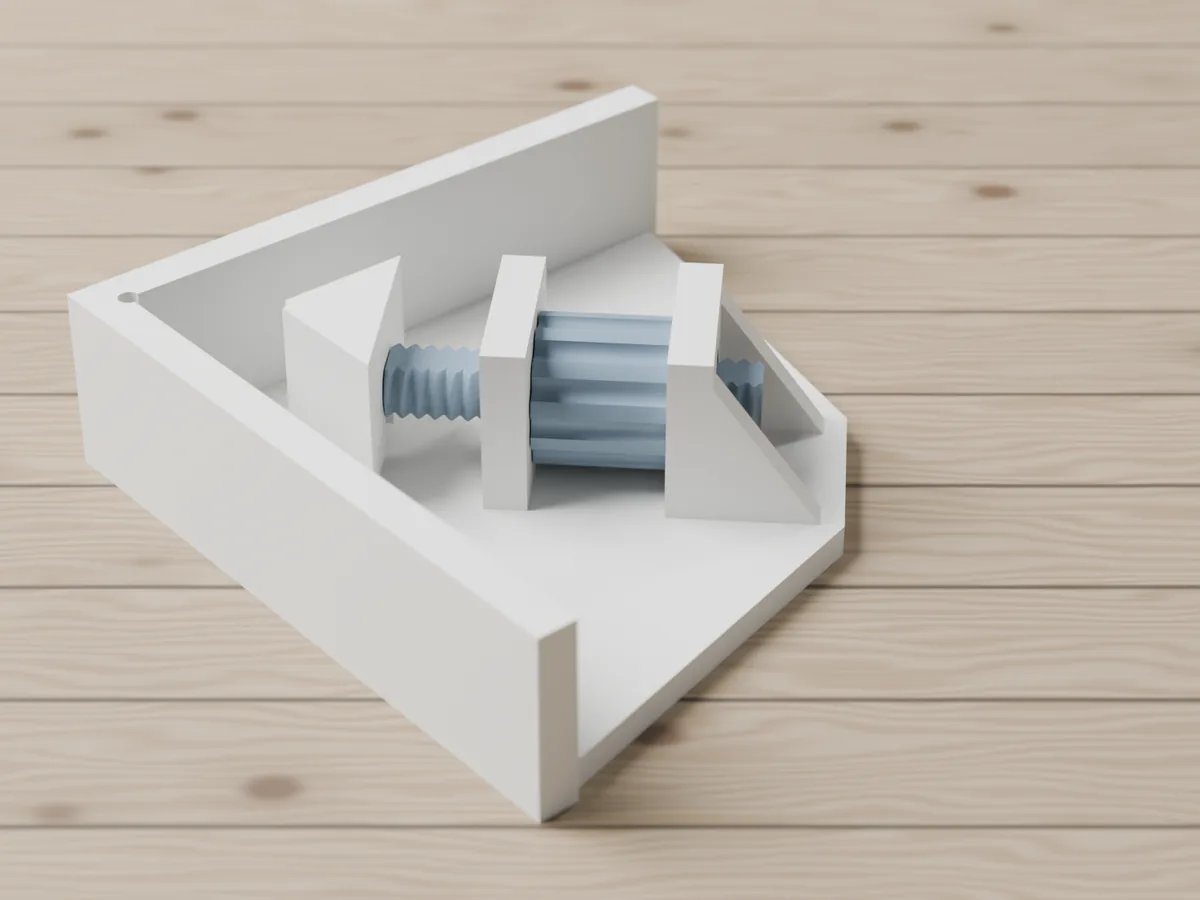
Check a gap before you cut, then hold the glued corner square with the clamp.
Details
- 150 mm (5.91 in) long and 24 mm (0.94 in) wide. The body runs on a step past the last mark so the final number has room.
- An 8 mm (0.31 in) hole through the thick end for a nail, a hook or a string.
- Plastic. Marks are recessed, so they won't rub off.
- It is a shop gauge for fitting shims, filler strips and spacers, and for checking a gap before you cut. For tolerance work, use calipers.
Questions
Which one should I get, metric or imperial?
Pick the units you work in, or get the pair. They are the same shape. Metric reads 1 to 30 mm with a line at every millimetre, imperial reads 1/16 to 1 1/4 in with a line at every sixteenth.
How do I measure a gap with a taper gauge?
Hold it tip first with its flat face against one side of the gap, slide it in until it stops snug, and read the line at the edge of the opening. Each number sits just past its line, toward the thick end.
Why does it read too wide sometimes?
If you force it in, you will read a gap wider than it is. Slide it in until it stops snug and don't push.
Can I read it from above?
Yes. The scale is on both side faces, and it is repeated on the sloped face for a gap you can see from above.
Is it accurate enough for tolerance work?
It is a shop gauge for fitting shims, filler strips and spacers and for checking a gap before you cut. For tolerance work, use calipers.
Can I hang it up?
Yes. There is an 8 mm (0.31 in) hole through the thick end for a nail, a hook or a string.
Compare with similar tools
| Tool | What it does | Job | Price |
|---|---|---|---|
| Gap gauge | Slide it into a gap and read the size off the scale. | Measuring a gap | from $15.45 CADfrom $11.95 USD |
| Disposable wet mil gauge | Press the edge into the wet coating and read the thickness in mils. | Coating thickness | $12.45 CAD$9.95 USD |
| HVLP spray distance gauge | Rest the foot on the work and read the mark at the air cap, every pass. | Spray distance | $7.95 CAD$5.95 USD |
| Radial corner templates | Hook it over a board corner, trace the curve, cut to the line. | Layout | from $4.95 CADfrom $3.95 USD |
Ordering, shipping and returns
- Paying. Add what you want to the cart, then check out on Stripe's hosted page. Choose CAD or USD with the toggle; the price at checkout is the price you pay.
- Shipping. I ship from Canada to addresses in Canada and the US, and orders ship the next business day after payment. Shipping is the actual postage (Canada Post or USPS), worked out from the weight and size of the parcel and your postal code or ZIP, and it is shown in your cart before you pay. Orders of $50 or more ship free. I cover customs and duties on US orders, so the price at checkout is all you pay.
- Returns. You have 30 days from delivery to return a tool. Write to me through the contact page first and I'll tell you where to send it. If a part arrives damaged or doesn't match what's listed, the terms say what happens next.
- About the pictures. They are renders of the design. Photos of the finished tools will be added once the first batches are made.
Guides for this tool
Related products
- Clamping and joinery
Corner clamp
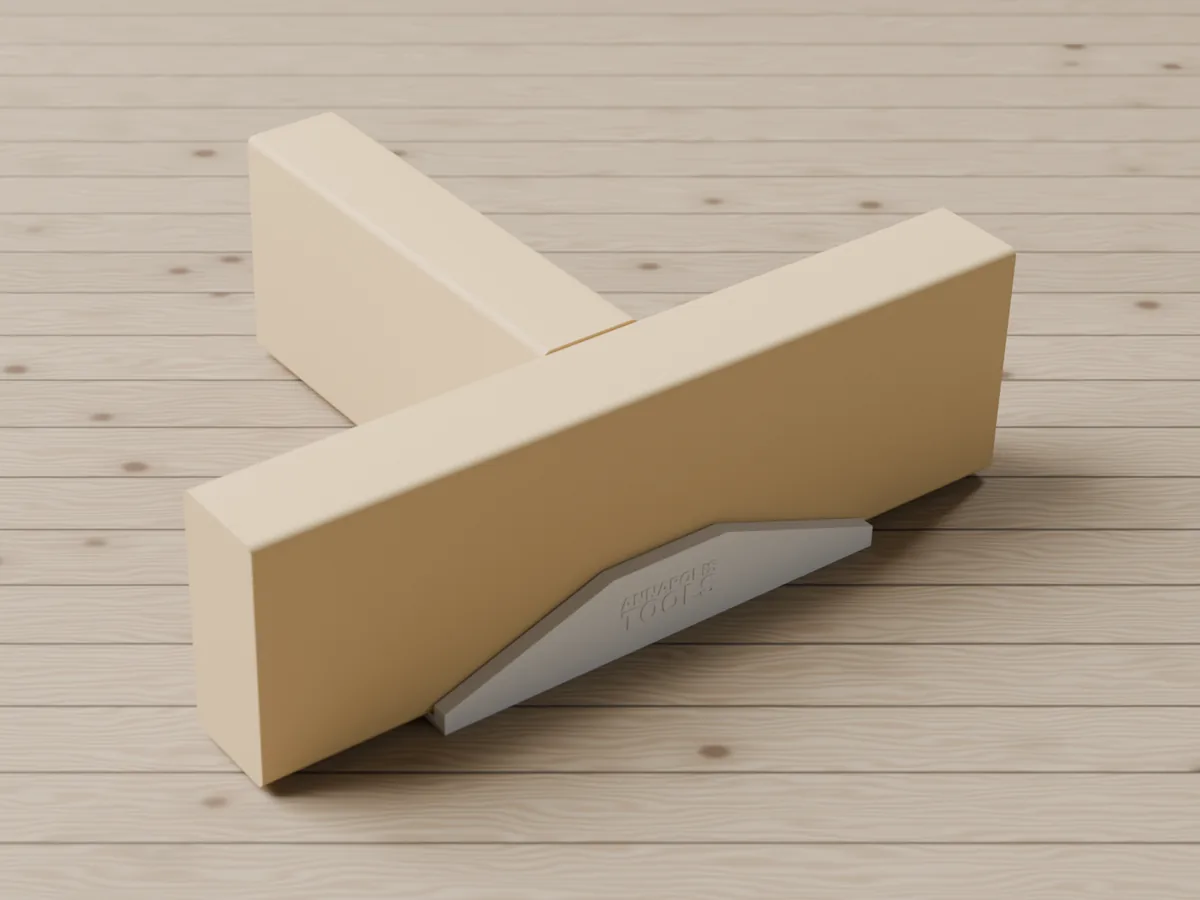
One knob pulls two boards square into a right-angle corner and holds them there while the glue sets.
from $8.45 CADfrom $6.95 USD
- Clamping and joinery
Lumber T-joint jig
Stands two 2x4s on edge in a T and guides your drill and screws into the end of the second board.
$10.45 CAD$7.95 USD
- Layout
Radial corner templates
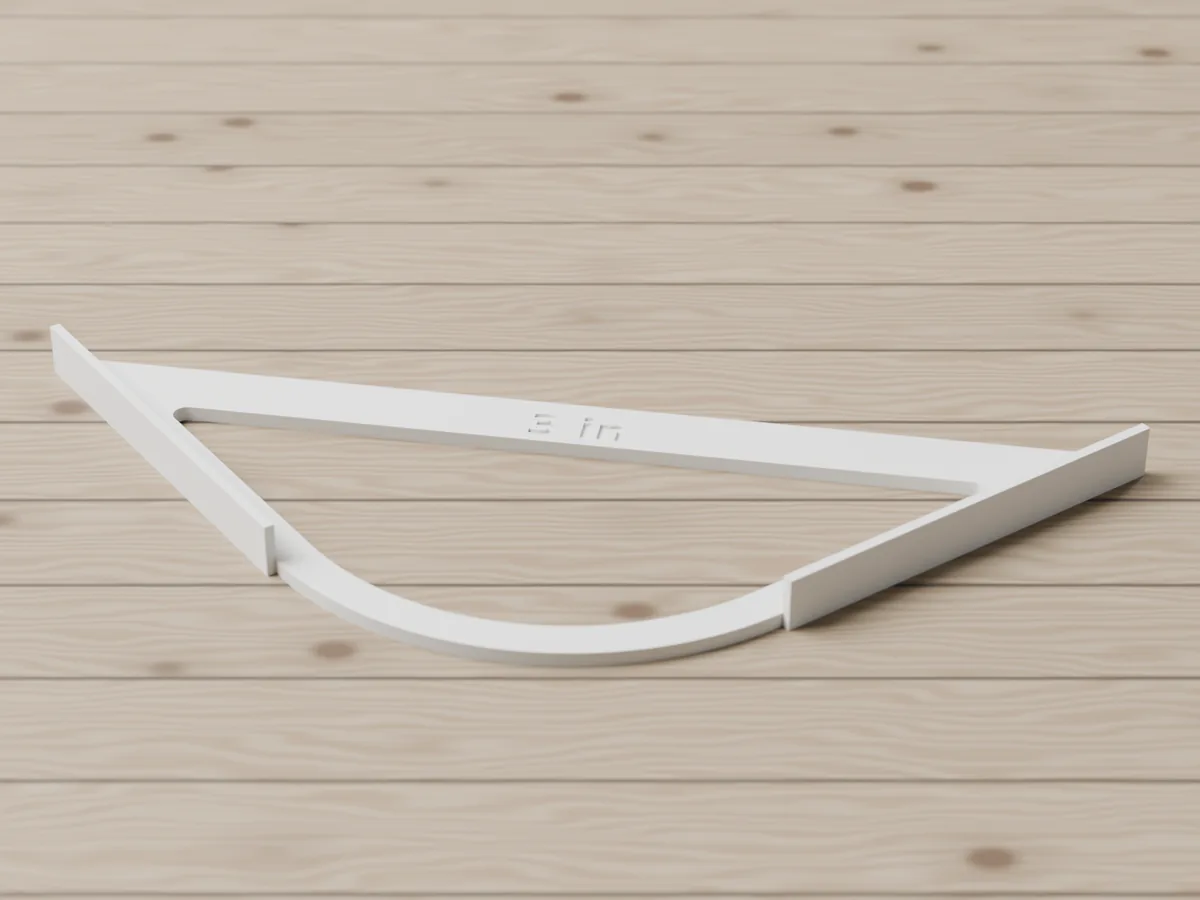
Hook it over a board corner, trace the curve, cut to the line.
from $4.95 CADfrom $3.95 USD
- Drilling
90 degree drill guide
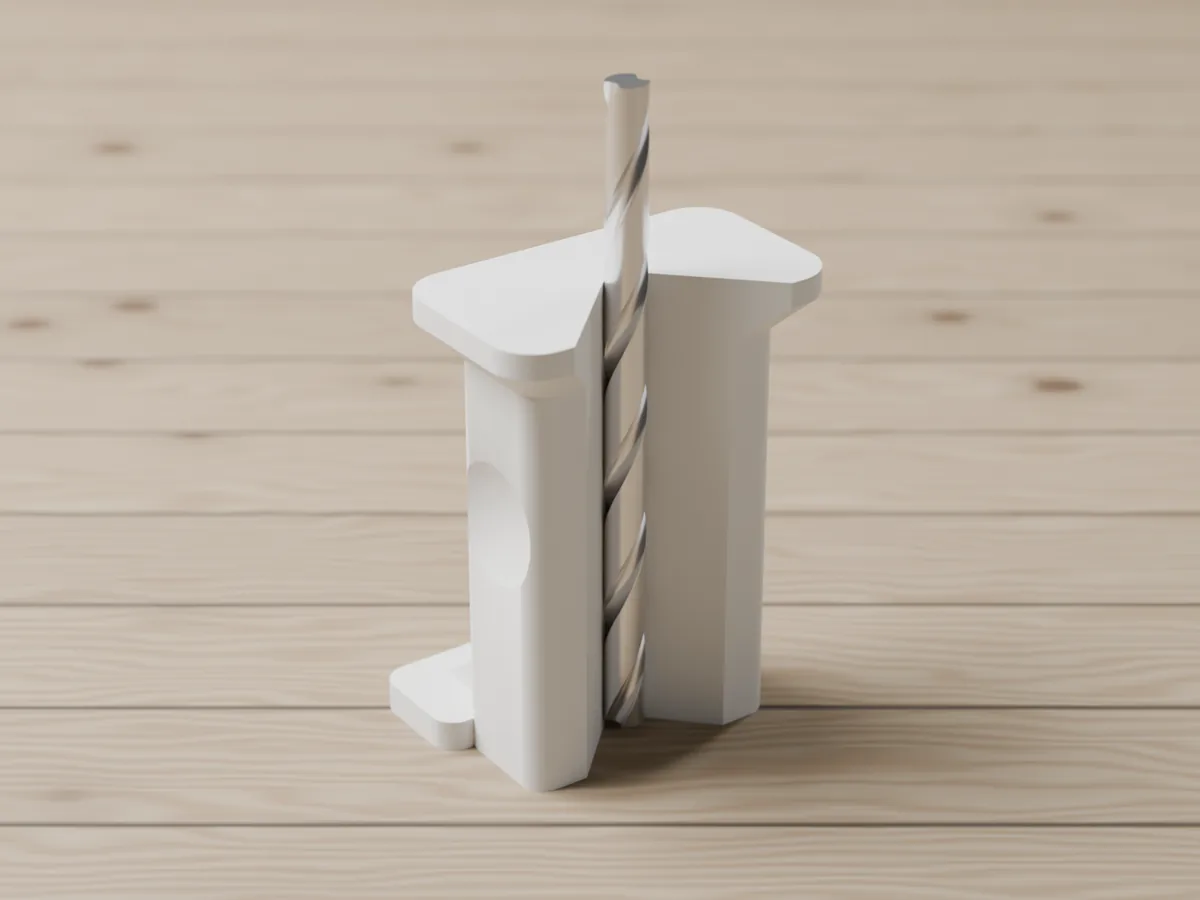
Hold a drill bit square to the work without a drill press.
$14.45 CAD$10.95 USD
More tools are on the shop page.